
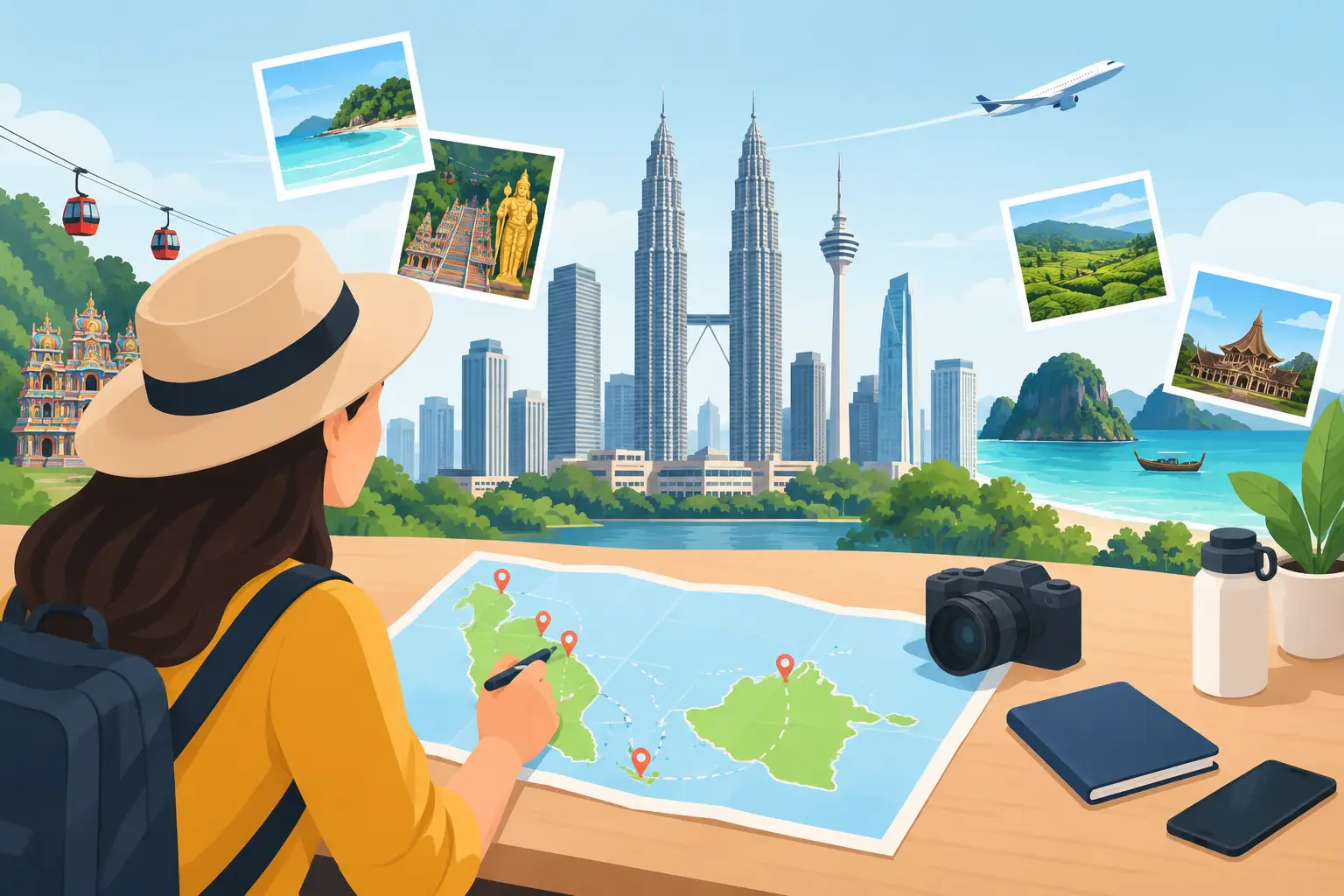
Malaysia rewards travelers who plan by region, not by a wish list. Kuala Lumpur’s skyline, Penang’s street food, Langkawi’s beaches, and Borneo’s rainforest can all fit into one trip, but only if you understand the distances between them. Knowing how to plan Malaysia itinerary days well means choosing a route that gives you time to enjoy each stop instead of spending your vacation checking in and out of airports.
Malaysia is easy to travel around, English is widely spoken, and every destination offers something distinct. The trick is resisting the urge to see all of it in one week. Build your trip around your arrival airport, travel pace, and the experiences that matter most to your group.
Start With Your Trip Length and Arrival City
Most international visitors arrive at Kuala Lumpur International Airport. Kuala Lumpur makes a practical first stop because it has the widest choice of flights, hotels, airport transfers, tours, and onward connections. Give the city at least two full days if you want to see major landmarks, eat across several neighborhoods, and take a side trip to Batu Caves.
For a five-to-seven-day visit, choose Kuala Lumpur plus one additional region. Penang works well for food, heritage streets, temples, and creative city exploring. Langkawi is the better choice for beaches, island scenery, and a slower finish. Trying to add both often creates more transit than vacation time.
With 10 to 14 days, you can combine Kuala Lumpur, Penang, and Langkawi, or swap an island for Sabah in Malaysian Borneo. Sabah deserves a separate block of time because it is not an easy day trip from Peninsular Malaysia. Flights are the sensible option, and once you arrive, you will want time for Kota Kinabalu, island activities, wildlife, or highland landscapes.
Choose One Route Instead of Zigzagging
A logical route saves money, energy, and precious daylight. Malaysia looks compact on a map, but traffic, ferry schedules, mountain roads, and airport time all shape the real journey.
Here are four routes that work well for first-time visitors:
- Five days: Kuala Lumpur and Penang for city energy, culture, and serious eating.
- Seven days: Kuala Lumpur and Langkawi for sightseeing followed by beach time.
- Ten days: Kuala Lumpur, Penang, and Langkawi for a balanced first trip.
- Two weeks: Kuala Lumpur, Penang, and Sabah for cities, food, islands, and nature.
If you are traveling as a family or group, fewer hotel changes usually make the experience better. Two or three bases can be far more enjoyable than changing hotels every other night. A private car also becomes especially useful when you have luggage, young children, older relatives, or a full day of stops planned outside the city center.
Decide What Malaysia You Want to Experience
The best itinerary is personal. A food-focused traveler will plan very differently from someone seeking beaches or a corporate group traveling on a tight schedule. Before booking anything, choose your top two priorities.
For food and culture, spend longer in Kuala Lumpur, Melaka, Ipoh, or George Town in Penang. Penang is a standout for hawker food, Peranakan heritage, murals, and walkable historic streets. Melaka is closer to Kuala Lumpur and suits travelers who want a relaxed overnight stop filled with colonial architecture and local dishes.
For beaches, Langkawi offers resort stays, mangrove tours, cable car views, and easy access from Kuala Lumpur or Penang. The Perhentian Islands and Redang are beautiful alternatives, though they are more seasonal and require extra transfer planning. Their boat services can be affected by monsoon conditions.
For wildlife and outdoor experiences, look to Sabah or Sarawak. Sabah is popular for island-hopping from Kota Kinabalu, Kinabalu Park, river wildlife cruises, and diving. Sarawak offers Kuching’s cultural mix, national parks, and rainforest adventures. These destinations are worth the flight when nature is a central reason for your trip, not merely a spare-day add-on.
Build Each Day Around Geography
A common planning mistake is grouping attractions by popularity rather than location. Kuala Lumpur traffic can turn a short-looking route into a long day, especially during weekday rush hours. Put sights in the same area together, then leave time for meals, weather, and spontaneous stops.
In Kuala Lumpur, pair the Petronas Twin Towers and KLCC Park, then explore Bukit Bintang later for shopping and dinner. Visit Batu Caves early in the morning, when temperatures are kinder and crowds are lighter. If you want to include Central Market, Chinatown, Merdeka Square, and the River of Life area, keep them together in one heritage-focused day.
In Penang, reserve a morning or afternoon for George Town rather than treating it as a quick photo stop. Its best moments are found between planned attractions: a coffee break in a heritage shophouse, a hawker stall recommendation, or a street mural you notice while walking. Add Kek Lok Si Temple or Penang Hill on a separate half-day, particularly if your group prefers a more relaxed pace.
Plan one anchor activity per day, such as a food tour, island cruise, guided city exploration, or theme-park visit. Everything else should support that anchor, not compete with it. This leaves room for Malaysia’s heat, tropical rain showers, and the occasional delight of staying longer somewhere you did not expect to love.
Plan Transport Before You Lock In Hotels
Transport choices should shape where you stay. Kuala Lumpur has rail options, but a private airport transfer is often easier after a long flight, especially for groups with several bags. In Penang and Langkawi, a charter car gives you more flexibility than relying on point-to-point rides when you want to visit multiple attractions in a day.
For travel between Kuala Lumpur and Penang, flying is fastest door to door for many travelers, while trains offer a more relaxed route if you have time. The train arrives in Butterworth, followed by a short ferry or road transfer to George Town. For Kuala Lumpur to Langkawi, a flight is generally the practical choice. Penang to Langkawi is usually an easy flight, while ferry availability and schedules may vary.
Do not book a hotel just because the nightly rate looks low. Consider its location, airport access, nearby dining, and the cost of getting everyone to your planned activities. A well-located stay can save enough daily travel time to make a higher room rate worthwhile.
For business visitors, government delegations, or premium group travel, vehicle comfort matters as much as capacity. A 12-seat luxury coaster can keep a full itinerary coordinated while providing the space and presentation expected for executive travel. For larger groups, book the appropriate charter size early, particularly around school holidays and major events.
Check Weather, Holidays, and Opening Times
Malaysia is warm year-round, but rain patterns differ by coast. Langkawi and Penang are commonly easier choices from roughly November through March, while islands on the east coast are generally more suitable from around March through October. Weather is never guaranteed, so keep flexible activities in your plan, especially for beach and boat days.
Public holidays can bring wonderful celebrations, but they can also mean busier roads, sold-out rooms, and higher prices. Chinese New Year, Hari Raya Aidilfitri, school breaks, and year-end travel periods deserve early bookings. During Hari Raya, some independently operated businesses may have adjusted hours, while domestic travel demand can be high.
Also check whether attractions close on particular days. Museums, markets, and some local businesses can follow different schedules depending on the state. Confirm your must-do activities before you build the rest of the day around them.
Leave Space for Local Advice and Last-Minute Changes
An itinerary should be a guide, not a contract. Save one unplanned afternoon for the place that earns more of your time, whether that is a night market in Kuala Lumpur, a beach in Langkawi, or a long lunch in Penang.
This is where a local guide can make a real difference. They can suggest the best time for an attraction, adjust a route around traffic, recommend dishes beyond the most obvious tourist picks, and help your group move at its own pace. With Tourplus, travelers can customize schedules and preferences directly with local guides rather than settling for a fixed route.
Keep your daily plan simple: confirm your transport, book the experiences that sell out, and leave the rest open enough for discovery. Malaysia is at its best when your schedule has direction but still has room for one more stop, one more plate, and one more local recommendation.


0 Comments